Why Does My Skin Sting? Fix Your Barrier Before Microneedling
Quick Summary
If your skin stings when you apply even a basic cream, microneedling is not the answer as it will make things worse. A damaged skin barrier must be repaired before you pick up a microneedling device. The good news: with the right routine, most skin barriers recover in just 2-4 weeks.
- Red Flag: Stinging, burning, or tightness when applying any product = your barrier is compromised.
- The Mistake: Microneedling damaged skin leads to more inflammation, slower healing, and potential hyperpigmentation.
- The Fix: A simple 2-step prep routine (gentle cleanser + rebalancing toner) to restore your barrier before needling.
Why Barrier Repair Is Essential Before Microneedling
Many users come to microneedling hoping to fix sensitive, red, or irritated skin. But this is where a major mistake happens.
If your skin stings when you apply even a basic cream, microneedling is not the solution. In fact, it can make things worse.
At HoMEso, we hear this question constantly: "Can I microneedle irritated skin?". It's crucial to understand one key thing: without a healthy skin barrier, microneedling is neither safe nor effective.
1. Is Your Skin Barrier Damaged? How To Tell
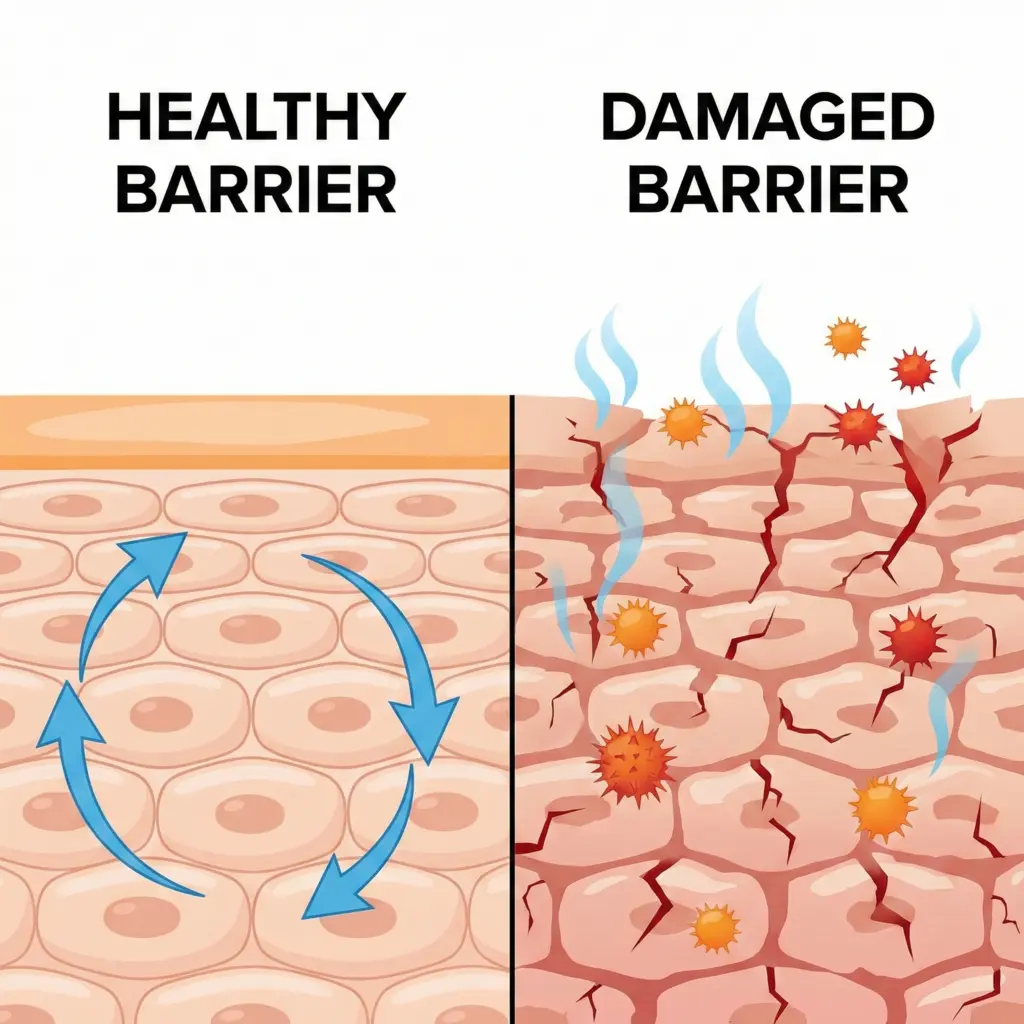
Your skin barrier (the outermost layer, called the stratum corneum) acts as a protective shield. It locks moisture in and keeps irritants, bacteria, and allergens out.
When this barrier is damaged, tiny micro-cracks form in the surface. Think of it like a brick wall with missing mortar — the structure is still there, but the gaps let everything through.
Use this checklist. If you recognize any of these signs, your barrier needs repair before any microneedling treatment:
- Stinging or burning when applying creams or serums
- Tightness, redness, a sensation of heat
- Itching or occasional flaking
- Skin reacting to products it previously tolerated well
These are classic symptoms of a damaged skin barrier.
What's really happening?
Your skin barrier acts like a protective wall. When it's damaged, micro-cracks form, allowing:
- moisture to escape,
- irritants to penetrate more easily,
- inflammatory processes to activate.
Microneedling in this state leads to:
- increased inflammation,
- slower healing,
- higher risk of post-inflammatory hyperpigmentation.
Key Takeaway: If your skin stings when you apply a basic cream, that is not "sensitivity", it is barrier damage. And it is fixable.
2. Why Microneedling Requires Healthy, Calm Skin
Microneedling works by creating thousands of controlled micro-injuries in the skin. This triggers your body's natural wound-healing response: new collagen is produced, skin texture improves, and serums penetrate deeper.
But here is the critical part most people miss: regeneration only works when the skin starts from a stable, healthy foundation.
Microneedling inflamed or barrier-compromised skin:
- does not speed up repair,
- does not improve texture,
- often causes the opposite effect.
The bottom line: Microneedling is not a shortcut for damaged skin. It is the final step of properly prepared skin.
3. The Solution: A Pre-Microneedling Skincare Routine for Barrier Repair
The goal of the preparation phase is simple: calm the skin, seal the micro-cracks, and restore natural balance. You do not need a 10-step routine. You need two targeted products used consistently.
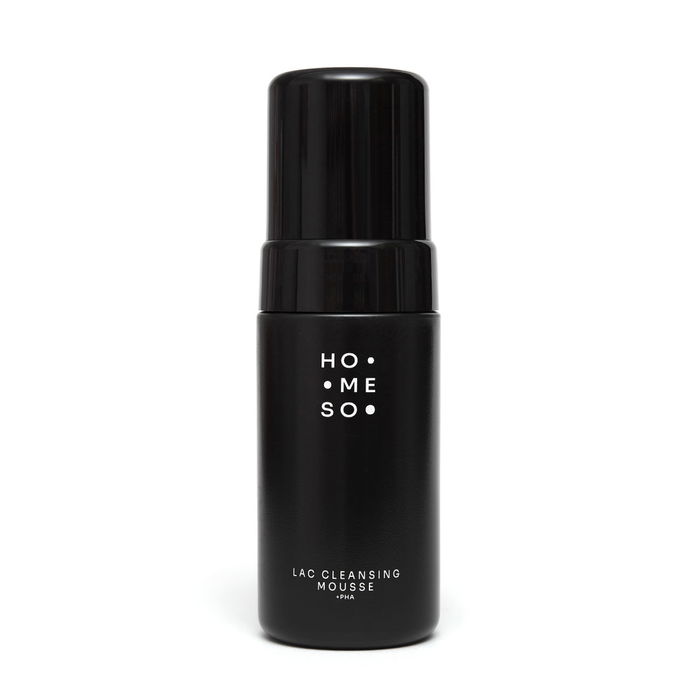
Step 1: Gentle yet effective cleansing — LAC Cleansing Mousse
The LAC Cleansing Mousse +PHA is specifically designed to cleanse without disrupting the barrier:
- Removes impurities and residue without causing stinging
- Preserves the natural lipid layer
- Suitable for sensitive, reactive, and barrier-compromised skin
- Contains PHA (polyhydroxy acid) for gentle, non-irritating exfoliation
The test: If your cleanser stings, your barrier is not ready for microneedling and your cleanser is part of the problem.
👉 Shop LAC Cleansing Mousse +PHA
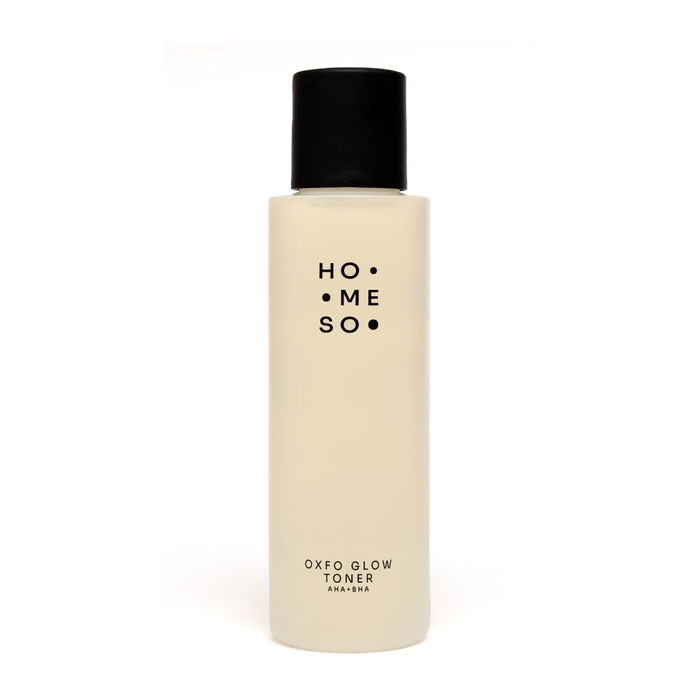
Step 2: Rebalancing and soothing — OXFO Glow Toner
The OXFO Glow Toner restores balance and actively supports barrier recovery:
- Normalizes skin pH after cleansing
- Supports the repair of the lipid barrier
- Reduces redness and tightness
- Prepares the skin to absorb moisture more effectively
This is the step most people skip, and it is often the reason their barrier never fully recovers before they start needling.

4. Your Action Plan: A 4-Week Barrier Repair Routine Before Microneedling
Do not rush this. A properly repaired barrier is the difference between microneedling that delivers glowing results and microneedling that causes a setback.
Week 1–2: Stop the damage
- Morning and evening: Cleanse with LAC Cleansing Mousse
- After cleansing: Apply OXFO Glow Toner
- Rules: No active acids, retinoids, or needling
Goal: The stinging stops. Products no longer burn on application.
Week 3–4: Barrier stabilization
Continue the same routine. Consistency is what rebuilds the barrier, not new products.
What to observe:
- Redness is visibly reduced
- Skin feels more comfortable and "bouncy"
- Products absorb smoothly without any stinging
- Skin tolerates touch without feeling reactive
Goal: Calm, resilient, non-reactive skin.
After 4 weeks: You are ready to microneedle
Your skin is ready for microneedling when ALL of the following are true:
- Products no longer cause any stinging or burning
- There is no visible redness or inflammation
- The skin feels hydrated and comfortable
- You have been consistent with the prep routine for at least 3–4 weeks
Now your skin has the foundation to heal properly from microneedling, and you will see the full benefits: improved texture, better product absorption, and a healthy glow.
👉 Ready to start? Get everything you need: Shop our Rejuvenation Kit With PDRN + Exosomes
Frequently Asked Questions
Can I microneedle irritated skin? No. Microneedling creates controlled micro-injuries that require a healthy barrier to heal properly. Needling irritated or inflamed skin increases the risk of infection, hyperpigmentation, and prolonged inflammation. Always repair the barrier first.
How do I know if my skin barrier is damaged? The most reliable sign is stinging or burning when you apply products that previously felt fine. Other symptoms include persistent tightness, redness, flaking, and new sensitivities to products you have used for months.
How long does it take to repair a damaged skin barrier? For most people, 2-4 weeks of consistent, gentle skincare is enough. The key is removing irritants (acids, retinol, harsh cleansers) and using products that support, rather than disrupt, the lipid layer.
What should I avoid while repairing my skin barrier? Avoid active acids (AHA, BHA), retinol, physical exfoliants, fragranced products, and of course microneedling. Stick to gentle cleansing, a rebalancing toner, and a simple moisturizer.
Can I use my HoMEso serum during the barrier repair phase? We recommend waiting until the barrier is fully restored before using any active serums. During the prep phase, keep the routine minimal: cleanser, toner, moisturizer. Once the barrier is healthy, serums will absorb better and deliver stronger results.
Still unsure if your skin is ready? Send us a photo of your skin and a description of your current routine — we will help you assess whether your barrier needs more time.
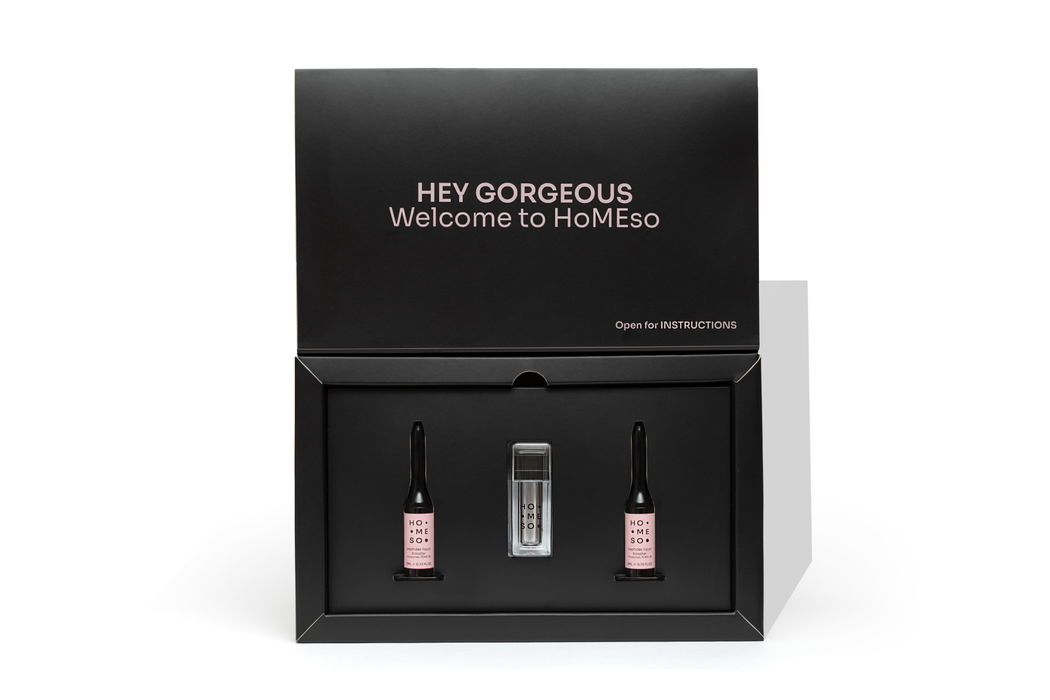
It works by creating micro-channels in the skin, which stimulate collagen production, improve skin texture and elasticity, and enhance the absorption of active ingredients for maximum effectiveness. With our innovative micro-infusion applicator, specially designed for home use, and our patented Peptide Serum Booster (featuring sonicated hyaluronic acid), you can achieve the same —completely safely and painlessly.
HoMEso is not a skincare treatment that requires an appointment. It's a next-generation skin therapy that you can experience anytime, anywhere—right in the comfort of your home.
Package contains:
1x Hygienically packed HoMEso applicator
2x Patented Peptides Serum Booster (3 ml)